
Lead Poisoning: Symptoms & Treatment
When do lead poisoning symptoms appear?
Sometimes, children and adults who’ve experienced lead exposure have no symptoms. Other times, the symptoms of lead poisoning won’t appear right away. When they do occur, the symptoms may develop over several weeks or months. Sometimes, symptoms flare up randomly.
Symptoms of lead poisoning
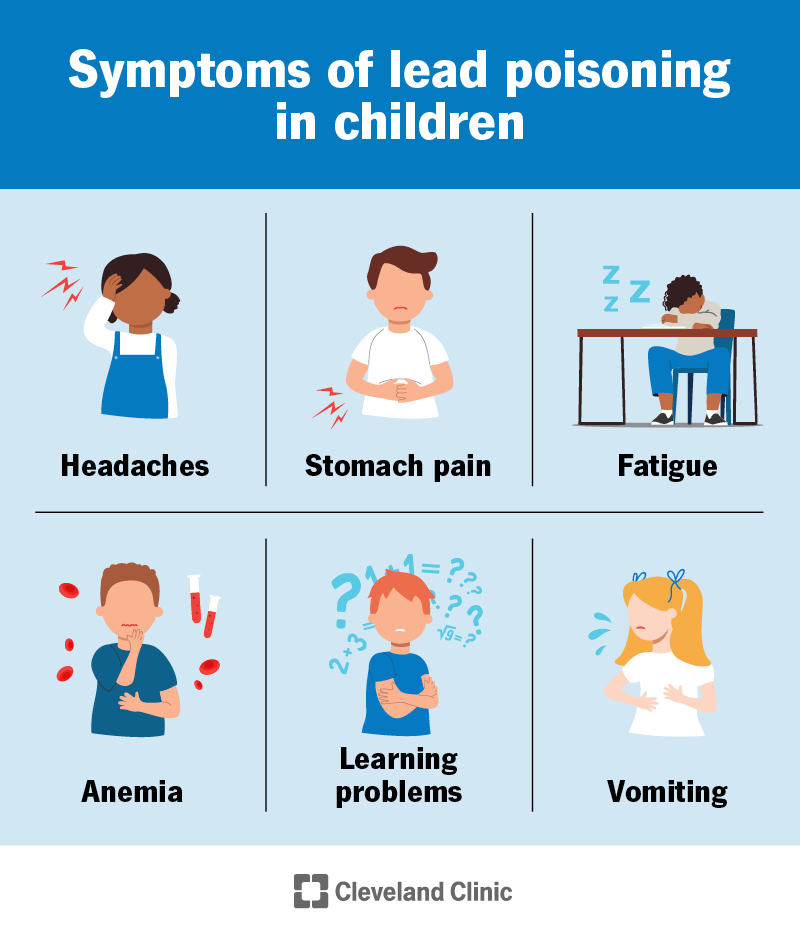
Often, children who have lead poisoning have no symptoms. Children can have high levels of lead in their bodies even if they’re not showing any signs of the condition. Lead poisoning symptoms may include:
- Cramps
- Hyperactivity (restlessness or fidgeting)
- Learning problems
- Changes in behavior
- Headaches
- Vomiting
- Fatigue
- Anemia
In adults, lead poisoning symptoms may include:
- Headaches
- Abdominal pain
- Personality changes
- Anemia
- Numbness in your feet and legs
- Loss of sex drive
- Infertility
Lead poisoning causes
In the U.S., children mainly get lead poisoning by swallowing and/or absorbing lead-based paint used in houses that were built before 1978. Lead paint gets into children’s systems when they:
- Eat or touch peeling paint chips and flakes that contain lead
- Put their hands, toys and other items covered with lead dust in their mouths
- Breathe in lead dust (which may get into the air during a renovation in an older home)
- Chew on windowsills, furniture, door frames and other items covered with lead-based paint
- Drink water from older water pipes that may leach lead
Adults can get lead poisoning by being exposed to lead through eating food and drinking water contaminated with lead. They may eat from dishes or drink from cups contaminated with lead. If you work in an environment with lead paint or are working on a home remodel, you could be exposed to lead dust.
Risk factors
Lead poisoning can affect anyone, but babies and children under the age of 6 are most at risk. This is because their bodies are still developing. Their brains and nervous systems are more sensitive to the harmful effects of lead. Also, babies and young children tend to pick up objects and put them in their mouths more frequently. These objects could be contaminated with lead.
Other people at risk for lead poisoning include:
- Children who live in low-income households
- Immigrants and refugees, due to less strict rules about lead exposure in their home countries
- Pregnant women with previous exposure to lead
- Babies breastfed by those with previous exposure to lead
- Babies fed with formula prepared with contaminated water
- People who work in industries or have hobbies that expose them to lead
link