Geneva Expertise in Medicinal and Aromatic Plants

Medicinal and Aromatic Plants
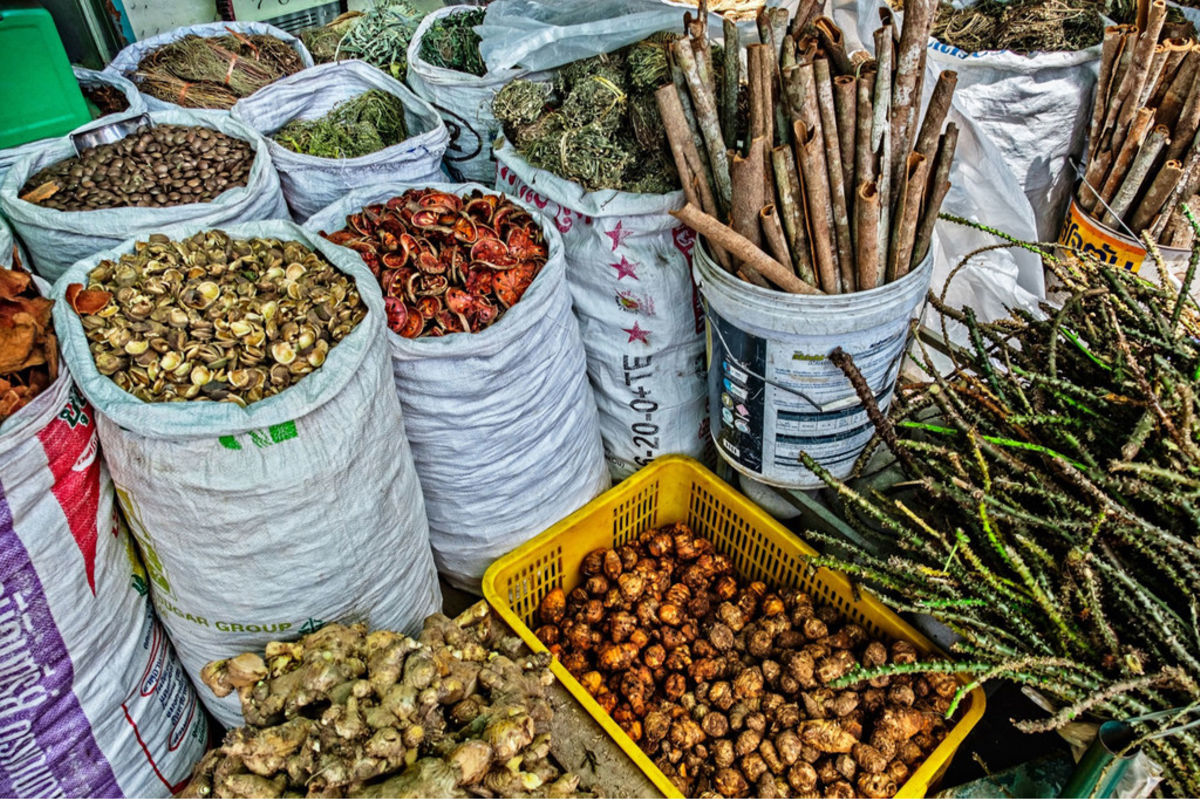
Medicinal and aromatic plants (MAPs) are botanical raw materials, also known as herbal drugs that are mostly used for aromatic, therapeutic and/or culinary purposes as components of cosmetics, medicinal products, health foods and other natural health products. They occur in nearly all terrestrial and even some aquatic ecosystems worldwide and have been used for therapeutic purposes since ancient times. Historical records trace their use in traditional medicine back more than 5,000 years across Indian, Chinese, Egyptian, Greek, Roman and Persian medical systems. Much of the therapeutic use of medicinal plants today is rooted in Indigenous knowledge systems that have been carefully developed and passed down through generations.
Uses of MAPs
MAPs are essential for both human health and ecological balance. Globally, an estimated 50,000–70,000 MAP species are harvested for their medicinal properties, forming the foundation of many healthcare systems and remaining vital to modern pharmaceuticals, as numerous active drug compounds are derived directly or indirectly from natural sources, despite advancements in synthetic chemistry. This is especially true in developing countries, where the World Health Organization (WHO) reports that the majority of the population relies on traditional medicine for primary healthcare.
Beyond their medicinal uses, MAP cultivation and wild harvesting sustain livelihoods around the world, with roughly one in five people depending on wild plants, algae and fungi for food and income. MAPs also contribute to various industries, including cosmetics, food, and luxury goods. The genetic resources derived from MAPs and traditional knowledge about MAPs are used for diverse applications in agriculture, medicine and conservation. MAPs play a crucial role in supporting ecosystems by stabilizing soils, promoting biodiversity and providing essential resources for pollinators, such as bees and hummingbirds.
Trade in MAPs
International trade in medicinal and aromatic plants has expanded rapidly over the past decades, with strong market growth in Asia, Europe and North America. A snapshot of the wild plant trade, using a Customs code for medicinal and aromatic plants (MAPs), HS1211, shows that global trade has increased from US$1.1 billion in 1999, to US$3 billion in 2015, with China alone exporting 1.3 billion kg of botanical ingredients in 2013. The growth of “natural” and “organic” consumer demand will only add to this pressure on wild collected species and their ecosystems. Compounding the issue, the (sometimes intentional) complexity of global wild plant trade chains makes it difficult to track volumes and species, threatening their survival in the wild, the wider wildlife that depend on them, and the livelihoods of local collectors.
Between January and December 2017, 27% of all CITES-related seizures reported by European Union Member States concerned medicinal products. This highlights both the intensity of trade and the risks of non-compliance, showing the need for sustainable harvesting practices and strong, well-regulated legal trade to ensure that medicinal plant use does not drive species decline.
Challenges faced by MAPs
MAPs face growing threats from habitat destruction, overharvesting, habitat loss, illegal trade and inconsistent quality controand illegal trade, making their conservation a global priority.
Approximately 60,000 MAP species are harvested globally. More than 20% of MAPs are threatened with extinction on the IUCN Red List, and 79% of medicinal and aromatic plant species have no conservation status. Additionally, 1,280 MAP species are listed under the Convention on International Trade in Endangered Species of Wild Fauna and Flora (CITES), including more than 800 in Appendix II, reflecting mounting conservation concerns as global demand continues to rise.
Beyond these ecological and regulatory concerns, additional challenges arise in relation to the knowledge systems that sustain their use. Although Indigenous knowledge relating to medicinal and aromatic species is increasingly recognized, significant challenges remain. One major concern is biopiracy — “the exploitation of knowledge and biological resources of tribes by firms in the pharmaceutical industry or scientists without providing proper compensation to the individuals who have been responsible for developing this information”.
In recent years, the challenges related to MAPs have been recognized as a challenge on which to work collaboratively, as demonstrated by CITES CoP19 Decision 19.261 – 19.264 Trade in medicinal and aromatic plant species, that tasked the Secretariat, working with the Plants Committee, to gather and share information to improve awareness of CITES rules for medicinal and aromatic plants, encouraging sustainable and legal trade, and review non-detriment findings (NDFs).
MAPs & the Kunming-Montreal Global Biodiversity Framework
The conservation and sustainable trade of MAPs directly support the achievement of several targets of the Kunming-Montreal Global Biodiversity Framework (KMGBF); namely:
Reducing threats to biodiversity
Meeting people’s needs through sustainable use and benefit-sharing
World Wildlife Day 2026 – Honoring MAPs
On 20 December 2013 at its 68th session, the United Nations General Assembly proclaimed 3 March as United Nations World Wildlife Day. The date marks the anniversary of the signing of the Convention on International Trade in Endangered Species of Wild Fauna and Flora (CITES) in 1973. Since then, World Wildlife Day has grown into the leading annual international event dedicated to raising awareness of the world’s wild animals and plants.
In 2026, World Wildlife Day will be celebrated under the theme “Medicinal and Aromatic Plants: Conserving Health, Heritage and Livelihoods“, shining a light on the vital role these species play.
Celebrate World Wildlife Day 2026 in Geneva and Beyond
With secretariats of key international organizations’ headquartered in Geneva, as well as local actors active in the protection and conservation of wildlife, consult the list of activities celebrating World Wildlife Day.
Role of Geneva
International Geneva plays a central role in shaping the global governance frameworks that regulate, monitor and support the sustainable use of MAP species. Home to key environmental and trade institutions, Geneva serves as a hub where biodiversity conservation, international trade, traditional knowledge and sustainable development intersect.
Convention on International Trade in Endangered Species of Wild Fauna and Flora | CITES
The Convention on International Trade in Endangered Species of Wild Fauna and Flora (CITES) stands at the forefront of efforts to ensure that international trade in medicinal and aromatic plants does not threaten their survival in the wild. Of the approximately 60,000 MAP species harvested globally, around 1,280 are estimated to be listed in CITES Appendices. Medicinal plant products also represent a significant proportion of reported seizures under CITES. MAPs governance continues to advance at CITES Conferences of the Parties, with 5 resolutions and 6 decisions regarding MAPs adopted as of 2026. For instance, COP19 in 2022 agreed on Decision 19.261 to share information materials that have been developed to enhance awareness of CITES regulations and to encourage sustainable use and legal trade in CITES-listed medicinal and aromatic plants.
Food and Agriculture Organization Liaison Office in Geneva | FAO Geneva
The FAO Liaison Office in Geneva is working with partners to achieve FAO’s corporate goal and the wider Sustainable Development Agenda. Through the wider work of FAO’s Plant Production and Protection Division, it advances sustainable plant production systems, pest management and agroecology.
Global Initiative Against Transnational Organized Crime | GI-TOC
The Global Initiative Against Transnational Organized Crime is a platform to promote greater debate and innovative approaches, which serve as the building blocks to an inclusive global strategy against organized crime. Through ECO-SOLVE, a programme that has been specifically designed to monitor the illicit online environmental trade, extract useful and digestible data, GI-TOC supports law enforcement and private sector actions, while driving greater transparency and accountability in tackling illicit online markets. It engages in multilateral coordination, enhancing political will and ensuring its work influences key international forums on law enforcement, data, and community engagement. The programme includes local and indigenous communities in regional and multilateral forums to drive productive, trusted and confident conversations between community members, enforcement officers and policymakers.
International Standardization Organization | ISO
The International Organization for Standardization (ISO) is a worldwide federation of national standards bodies. It contributes to the medicinal and aromatic plants (MAPs) sector by providing international standards that ensure quality, safety, traceability and common terminology of aromatic and medicinal plants. This work is carried out through ISO technical committees such as the Technical Committee on essential oils (ISO/TC 54) and the Technical Committee on Traditional Chinese Medicine (ISO/TC 249). Specific ISO defining terminology and identity criteria/quality requirements for MAPs include: ISO 9235 – establishing internationally recognized vocabulary for plant-derived aromatic substances; and ISO/TC 34/SC 7, which covers spices and culinary herbs, many of which overlap with medicinal and aromatic plants.
International Trade Centre | ITC
The International Trade Centre (ITC) is the joint technical cooperation agency of the United Nations (UN) and the World Trade Organization (WTO), focusing on sustainable, inclusive and green trade. ITC published in 2023 the Export Guide on medicinal and aromatic ingredients and plants, supporting exporters to comply with regulations, meet sustainability standards, boost their branding, while connecting with buyers and trade promotion opportunities.
International Union for Conservation of Nature | IUCN
The International Union for Conservation of Nature (IUCN) is the global authority on the status of the natural world and the measures needed to safeguard it. IUCN longstanding work on the conservation of medicinal plants is now led by the Medicinal Plant Specialist Group (MPSG), which produces knowledge on the conservation status of priority MAPs, guides conservation planning and action and conducts awareness-raising activities for both the industry and consumers in protecting threatened species. IUCN was part of the creation ), now merged in the FairWild Standard provides a unified modular system of both standards’ requirements for assessing harvests of wild plants against ecological, social and economic requirements.
United Nations Development Programme | UNDP
The United Nations Development Programme (UNDP) plays an important role in supporting countries and territories to achieve the Sustainable Development Goals. It implements numerous projects that address the sustainable harvesting of threatened medicinal and aromatic plant (MAP) species, with particular emphasis on integrating traditional knowledge into conservation and livelihood strategies. UNDP is one of the partners in the annual organization of World Wildlife Day, supporting intiatives dedicated to wildlife conservation.
United Nations Trade and Development | UNCTAD
The UN Trade and Development works on a range of issues relating to trade, including its sustainability and trade in natural resources commodities, including MAPs. Through its BioTrade Initiative, UNCTAD promotes biodiversity-based trade and opportunities that benefit rural communities, protect ecosystems and the uptake of healthy, fair, and environmentally friendly products in cosmetics, food and health industries.
United Nations Economic Commission for Europe | UNECE
The United Nations Economic Commission for Europe (UNECE) addresses MAPs within its broader work on Forests and Bioeconomy, where it discusses forest products.
International Union for the Protection of New Varieties of Plants | UPOV
The International Union for the Protection of New Varieties of Plants establishes standards for plant variety protection and promotes the development of new plant varieties. It encourages members to extend protection to all plant genera and species, which include medicinal herbs, aromatic plants, and traditional crops.
World Health Organization | WHO
The World Health Organization (WHO) is the United Nations agency that connects nations, partners and people to promote health, keep the world safe and serve the vulnerable. As a follow-up to its Traditional Medicine Strategy 2014-2023, in 2025, WHO developed a dedicated Traditional Medicine Strategy for 2025–2034, recognizing the importance of protecting traditional knowledge systems and promoting the responsible and sustainable use of natural resources. Medicinal and aromatic plants occupy a central place in this agenda, as they form the foundation of many traditional and complementary health systems worldwide. WHO has also established “Guidelines on Good Agricultural and Collection Practices (GACP)” for medicinal plants, aimed at ensuring high-quality raw materials while minimizing environmental degradation.
World Intellectual Property Organization | WIPO
The World Intellectual Property Organization (WIPO) addresses medicinal and aromatic plants mainly through the protection of traditional knowledge, the governance of genetic resources and the regulation of intellectual property rights, with the aim of preventing misappropriation. In May 2024, WIPO member states adopted a landmark Treaty on Intellectual Property, Genetic Resources and Associated Traditional Knowledge, which aims to prevent the misappropriation of traditional medicinal knowledge and the granting of erroneous patents based on knowledge that already exists within Indigenous Peoples and local communities.
Through its Intergovernmental Committee (IGC) on Intellectual Property and Genetic Resources, Traditional Knowledge and Folklore, WIPO continues to develop legal mechanisms to strengthen the protection of traditional knowledge systems, which encompass medicinal and aromatic plants. In addition, WIPO Lex, a database containing legal information on intellectual property (IP) from around the world, provides access to national and regional legal frameworks relevant to herbal and traditional medicinal products.
World Trade Organization | WTO
The World Trade Organization (WTO) contributes to the governance of international trade in MAPs by providing the global rules-based framework that promotes transparency, predictability, and non-discrimination in trade. A key tool in this system is the Harmonized System (HS), which standardizes the classification of traded products worldwide. Medicinal and aromatic plants are commonly traded under HS Code 1211, which covers plants, plant parts, seeds and fruits used primarily in perfumery, pharmacy, or for insecticidal and similar purposes, whether fresh, dried or processed.
World Wildlife Fund | WWF
The World Wide Fund for Nature (WWF) is a leading organization in wildlife conservation and endangered species. It has contributed to global efforts to conserve medicinal and aromatic plants (MAPs) by helping develop and promote standards for sustainable harvesting and trade, including the International Standard for Sustainable Wild Collection of Medicinal and Aromatic Plants (ISSC‑MAP).
Through the joint “Saving Plants that Save Lives and Livelihoods” initiative, WWF and partners have supported the application of these standards in field projects across multiple regions, helping communities implement sustainable harvesting practices and improve livelihoods while safeguarding wild plant populations.
Switzerland and Local Geneva
Bioparc Genève
Bioparc Genève, formerly the Challandes Animal Park, is home to 300 animals from around 90 species and engages in conservation, research, environmental education and zoo therapy. It is a center of competence and expertise on wild, local and exotic animals and an essential player in the field of knowledge about animal species, from information on how to adopt the best behavior towards local wildlife to the training of animal caretakers. Bioparc Genève also supports plant and ecosystem conservation through its commitment to biodiversity and alignment with the Convention on Biological Diversity (CBD) and related agreements, such as the Nagoya Protocol. Its efforts in habitat preservation, research and public awareness indirectly protect plant species and genetic resources by maintaining healthy ecosystems and promoting sustainable biodiversity practices.
Biovision
Biovision is a Swiss-based foundation committed to building sustainable food systems – from farm to fork. It promotes agroecological approaches, socially equitable value chains, and food security, and agricultural production that is in harmony with nature. It conducts focused research and projects in sub-Saharan Africa and in Switzerland to develop solutions for the future. Through its revitalizing traditional knowledge project, Biovision strengthens the resilience of local communities by combining agroecological farming methods with traditional knowledge. Women, men and young people learn to preserve local seed and grow diverse, climate-resilient food to protect sacred natural sites. In doing so, they promote biodiversity and soil fertility, as well as cultural identity and social cohesion.
Conservatory and Botanical Garden of Geneva | CJBG
With more than 200 years of history and fidelity to the spirit of its founders, the CJBG carries out its missions of exploration, research, education and protection, while continually enriching its collections. With its living collections, herbarium with 6 million specimens and extensive library, it is a major center for plant conservation, research and education, ranking as one of the five most important in the world. The Conservatory and Botanical Garden of Geneva houses around 12,000 plant species from all five continents, including tropical, Mediterranean, alpine, and medicinal/aromatic plants. It supports sustainable use and preservation of MAPs through collaborations with international initiatives like the Convention on Biological Diversity (CBD) and the Global Strategy for Plant Conservation, and by showcasing field projects protecting rare and endangered species.
University of Geneva | UNIGE
The University of Geneva, through its Department of Plant Sciences, hosts numerous laboratories dedicated to furthering the understanding of plant species and their conservation.
ProSpecieRara
ProSpecieRara preserves the genetic and historical-cultural diversity of cultivated plants and farm animals for future generations in collaboration with a Swiss network of volunteer multipliers and breeders. ProSpecieRara works on MAPs through the preservation of as many varieties of MAPs as possible that are still present in Switzerland and through the search for other rare species.
Valplantes
Valplantes brings together around forty certified organic producers who cultivate their crops in an exceptional alpine environment in the heart of the Valais Alps, at an altitude of between 800 and 1,400 meters. It is engaged in the production of more than 30 plant species and their drying, processing, and Domestication of alpine plants.
1001 herbes
1001 Herbes is a small-scale, Geneva-based producer dedicated to cultivating, drying, and packaging aromatic, medicinal and edible plants with respect for nature and traditional values. The entirety of the production is certified Bio Suisse and approved under the Genève Région Terre Avenir (GRTA) label, which ensures sustainable and organic practices. The farm prioritizes biodiversity by minimizing chemical interventions and utilizing polyculture, composting and the construction of habitat for local species.
GEN Events


Latest News and Resources
link