An Interview with David Welch
Q: What sensitivities do humans exhibit to artificial light at night?
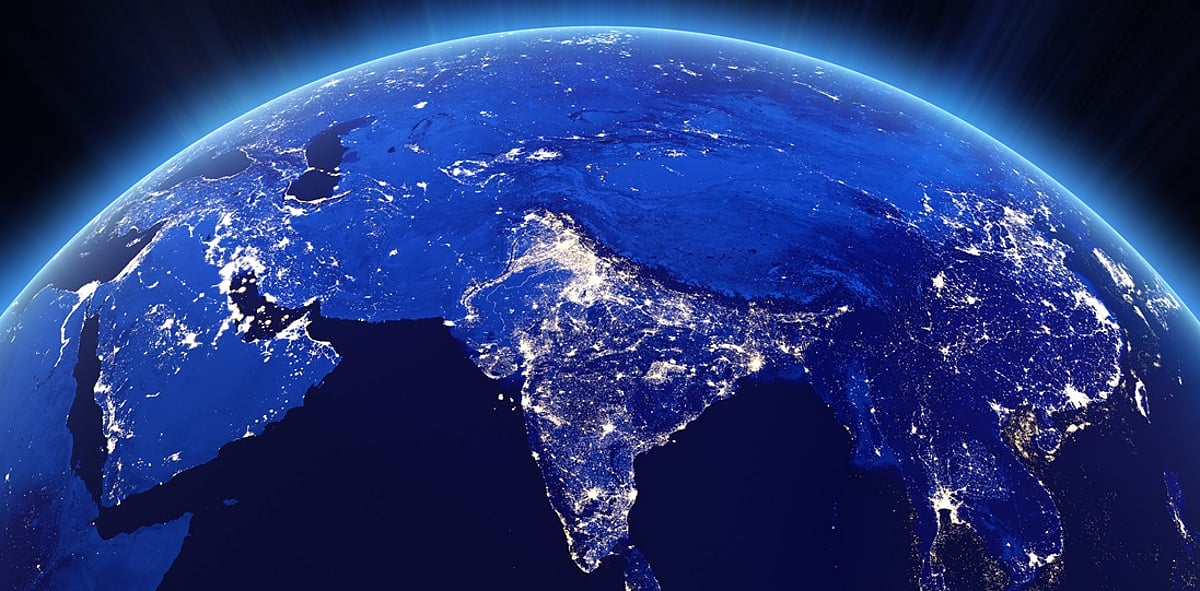
A. For more than a billion years, life on Earth has been exposed to the day-night cycle and has evolved to benefit from and exploit the contrast between day and night. In humans, this circadian rhythm schedules many important biological functions. During the 20th century there was a significant brightening of artificial light at night (ALAN), so that most of the planet’s population no longer benefits from a naturally dark night. Historically, ALAN was considered benign, even beneficial. Artificial light was considered a symbol of prosperity. Emerging health issues were attributed to other social and environmental changes that increased reliance on public health systems. There were no critical health assessments when outdoor lighting was being considered. However, in the late 20th century, research into biology and ecology began to reveal that ALAN has a profound impact on human and animal health.
But artificial light changes the night into one for which no life has evolved. We know now that human biology, as with plants and animals, is so entrained to light and dark periods that biological processes are scheduled to occur at specific times during the 24-hour period. After sunrise, hunger and alertness increase, peaking at about 10 am. Coordination and reaction time is best around 3 pm, while the cardiovascular system is at peak efficiency and muscle strength peaks at 5 pm. The deepest sleep is around 2 am.
This daily rhythm is synchronised by the beginning of night, when the illumination of twilight falls below the threshold of approximately the full moon, the brightest natural light of the night. To put this illumination into perspective, this threshold is less than 1/10 of the illumination required to read comfortably.
We also know that along with our eyes’ well-known rods and cones, non-imaging but light-sensitive retinal ganglion cells have evolved to detect the fading twilight. These cells are primarily sensitive to the blue light of twilight and are our subconscious twilight detectors. They support the regulation of the release of hormones that help fight infection, disease and some cancers. Ambient light is usually composed of a range of colours. White light has a bright blue component that subconsciously fools our twilight detectors into reporting that it is still daytime or early twilight and inhibits the release of the restorative hormones. After a few hours, these hormones begin to atrophy and are reabsorbed. Over time, this undermines the natural biology that maintains physical and mental health. The role of our twilight detectors is relatively new knowledge, which flags the profound impact of ALAN.
Our bodies synthesise and accumulate the hormone melatonin during daylight and release it when our eyes’ retinal ganglion cells sense that it is night. Melatonin secretion enables the release of other hormones that rejuvenate our bodies after a stressful and strenuous day. During daylight other biochemicals are released to ensure that we can cope in the day, whereas the hormones that are released at night help combat disease, particularly viral infections. They also aid in the attack on incipient cancer cells to reduce the chance of tumour growth. Light at night, especially blue spectrum and even with eyelids closed, suppresses the release of melatonin, since our brain sees the blue spectrum light as a signal of daytime. The lack of a good, dark sleep can also lead to heightened levels of stress, anxiety, reduced cognitive functions and increased symptoms of dementia. All these side effects strain public healthcare systems and reduce the quality of life.
Studies into late night activity, using vehicular traffic as the proxy, confirm that most people sleep at night, and have no need for night lighting outdoors or indoors. However, the illumination through a window from outdoor lighting can light a room more than the full moon outdoors. Minimising the impact of bright, white and unshielded light is technically practical. Shielding outdoor lights so that they do not shine into buildings requires modifying existing luminaires or requiring that all new luminaires be carefully shielded and dimmed or turned off late in the evening.
Society should adopt the non-white outdoor lighting that does not contain blue-light components. Although ALAN helps to extend daytime activity into the night, society should debate the priorities of late-night activity against improved health for all and require governments to educate and regulate accordingly.
Q: Unpolluted skies are widely accepted as a human right. Does its violation have more impacts than we realise?
A. It is accepted as a human right after many important international organisations recognised it as such in 2007. They came to this conclusion by understanding not only the impacts of light pollution on nature and astronomy, but also on its interference with cultural traditions and mythologies, not just in the past but also for many of today’s traditional societies and their practices. Light pollution also compromises public safety. For instance, glare from bad lighting [which is a form of light pollution] prevents us from seeing into shadows for potential predators or increases the risk of traffic accidents. However, not many disturbances caused by light pollution are widely recognised in the face of other social and environmental issues and because of widespread unawareness of the problem.
Q: Will light pollution influence the evolution of species? If yes, how
A. Probably, but that is my personal guess. However, evolution, as distinct from social adaptation, typically spans millennia, by which time it would be too late anyway. Like so many other environmental problems light pollution probably needs to be fixed within years, decades at most, to avoid significant impacts to wildlife populations. Migrating animals may find new routes and timings, that is, social adaptation, without evident physiological and genetic changes. Again, however, migrations are probably more affected by international border walls, agricultural fencing, clearing of natural vegetation and pesticides.
We do know that, as with any resource, ALAN can be exploited by some species, which can result in harm to others. Particular examples include the expansion of diurnal species into nighttime hours, exploiting the night light niche. This can give one species a competitive advantage over others and can drive invasions of nonnative species. Nocturnal species may preferentially use the conditions provided by artificial light. Examples are bats consuming insects clustered around street lights, and prey species concentrating in brighter areas to better see predators.
Artificial light has a negative effect on migratory and hatching birds that time their activities according to expected leaf-out and budding times. Similarly, insects such as the winter moth Operophtera brumata, common in Europe, lay eggs so that the caterpillars hatch at the same time as the trees produce their first tender young leaves. If trees leaf out a week too early, the caterpillars have to eat tough leaves that are less nutritious and that are packed with tannin, a natural defence against pests. That means there are fewer caterpillars for songbirds to eat.
link