


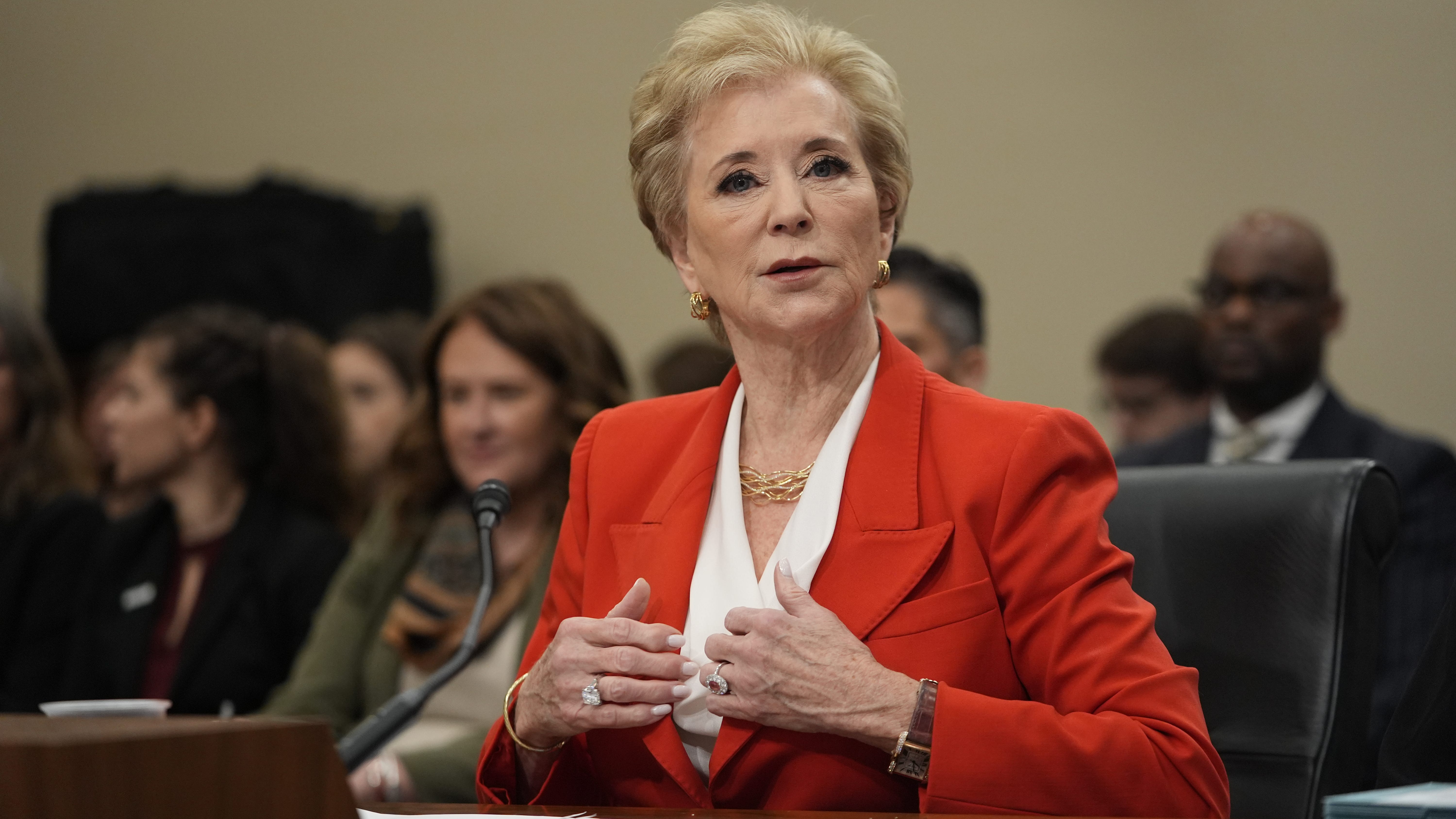


Sen. Baldwin asks education secretary why Wisconsin federal grants cut
Linda McMahon was questioned heavily about the loss of eduction funding and the federal grants already cut this year.
A new $5 million grant is set to bring more mental health professionals to Milwaukee Public Schools.
The U.S. Department of Education awarded MPS the four-year grant to help the district recruit and train school psychologists through partnerships with Alverno College and the University of Wisconsin-Madison.
“We know that demand for student mental health services and support has increased exponentially since the pandemic, and schools are often the first place that students turn for help,” MPS Superintendent Brenda Cassellius told reporters Feb. 11. “This new funding allows MPS to develop the district’s own school psychology professionals, providing them with firsthand experience and professional training to support our students’ academic, social and emotional well-being.”
Cassellius said MPS will use the funding to expand its pipeline of school psychologists. As part of that effort, graduate students from UW-Madison and Alverno will complete internships and practicums in Milwaukee schools, said Myah Herro, a supervisor in the district’s Office of Psychological Services.
She said the partnership and grant funding will allow MPS to add five new internship positions. The grant will also fund two part-time roles, including a mentor professional and a practical support professional.
According to the grant abstract, the district plans to train at least 24 school psychology graduate students in MPS classrooms and complete 56 internship and practicum placements by the end of the four years. The district intends to hire at least five graduates as full-time school psychologists, the abstract says.
Jessica Willenbrink, Alverno College’s school psychology program director, said the collaboration will benefit both MPS students and graduate students preparing to work in schools.
“This partnership not only gives Alverno students the chance to learn directly within Milwaukee Public Schools, it also allows them to have an immediate, meaningful impact on the students they’re serving,” Willenbrink said. “It’s a win-win.”
Cassellius said the new initiative builds on recent investments in the district’s mental health services. She said MPS has strengthened its staffing ratios using funding from the $252 million property tax referendum voters approved in 2024.
“The district improved its mental health staffing ratios from one professional for every 175 students in 2020 to one professional for every 145 students today,” Cassellius said. “This grant will allow MPS to further build on that progress and provide the additional mental health support to our students so that they get what they need.”
According to a 2023 report from the state Department of Public Instruction, over half of Wisconsin students reported experiencing anxiety, one in three reported experiencing depression almost every day for two weeks in a row or more and one in five students reported non-suicidal self-harm.
Across Wisconsin, many school districts’ student-to-counselor ratios exceed levels recommended by experts. School districts often rely on referendums, grants and other initiatives to increase funding for counseling and mental health services.
“If you talk to our students … you know the heavy burden that they carry around with mental health,” Cassellius said. “Having additional professionals to support our kids is going to be critical.”
MPS is one of 65 recipients nationwide of this year’s federal awards for school-based mental health programs. The U.S. Department of Education announced more than $208 million in mental health grants for the programs in December.
The latest round of funding comes after the U.S. Department of Education abruptly canceled more than 200 school-based mental health and provider grants in May, including a $10 million, five-year grant for the state Department of Public Instruction to improve youth mental health programs in schools across Wisconsin.
The Trump administration said it terminated those grants because some of the funds were used for initiatives that prioritized diversity, equity and inclusion, or supported trainings on topics like systemic racism and race-related stress and trauma.
The Department of Education changed the eligibility requirements for the latest grants, awarding funds only to state or local education agencies that partner with colleges and universities to implement the programs.
Kayla Huynh covers K-12 education, teachers and solutions for the Journal Sentinel. Contact: khuynh@gannett.com. Follow her on X: @_kaylahuynh.
Kayla’s reporting is supported by Herb Kohl Philanthropies and reader contributions to the Journal Sentinel Community-Funded Journalism Project. Journal Sentinel editors maintain full editorial control over all content. To support this work, visit jsonline.com/support. Checks can be addressed to Local Media Foundation (memo: “JS Community Journalism”) and mailed to P.O. Box 85015, Chicago, IL 60689.
The JS Community-Funded Journalism Project is administered by Local Media Foundation, tax ID #36-4427750, a Section 501(c)(3) charitable trust affiliated with Local Media Association.
link