


Most babies, toddlers and children will develop a skin rash at some point before they turn 18. They’ll probably have more than one. Fortunately, most childhood rashes aren’t serious.
Advertisement
Cleveland Clinic is a non-profit academic medical center. Advertising on our site helps support our mission. We do not endorse non-Cleveland Clinic products or services. Policy
Rashes in kids develop for various reasons. From allergic reactions to viral infections, you’ll likely see your child through a rash. The symptoms of rashes can differ, and so can their appearance. So, it’s important to know about the ones that can affect your child and how to treat them.
If your child has a rash, it’s probably nothing to worry about. But as their caretaker, you know them best. If something seems off, trust your judgement. A trip to your child’s pediatrician will put your mind at ease and provide your child with symptom relief.
The most common skin rashes in babies and kids
Many different types of rashes can affect babies and children. Common skin rashes in children include:
Dermatitis
“Dermatitis” is an umbrella term for any condition that causes skin inflammation (redness or skin discoloration). Types of dermatitis include:
- Diaper rash: Diaper rash is the most common baby rash. It affects your baby’s buttocks, genitals and thighs. Another name for this rash is diaper dermatitis.
- Cradle cap: Cradle cap is a harmless skin condition that affects your baby’s scalp. Another name for this rash is infant seborrheic dermatitis.
- Baby eczema: Baby eczema causes dry, itchy skin. It most commonly affects your baby’s face. Another name for this rash is atopic dermatitis.
- Contact dermatitis: Contact dermatitis causes an itchy skin rash. It occurs when your baby comes into contact with an allergen or irritant.
Viral infections
Viral rashes in babies and children are common. Many different viruses cause them. Types of viral infections include:
- Fifth disease: This infection causes a rash on your baby’s face that makes their cheeks bright red. That’s why it’s also called slapped cheek disease. It causes a lacy rash on your baby’s arms and legs, too.
- Roseola: This infection affects most babies and toddlers by the time they turn 2. After a high fever, it causes a rash that appears all over your baby’s body. Another name for this infection is sixth disease.
- Chickenpox: This childhood rash used to be very common. Now, a vaccine can prevent most cases. Another name for this infection is varicella-zoster.
- Measles: Measles is a very contagious infection. It can cause flu-like symptoms and a rash that spreads all over your child’s body. A vaccine can prevent measles.
- Rubella: Rubella may look similar to measles, but a different virus causes it. A vaccine can prevent it. Another name for this infection is German measles.
- Molluscum contagiosum: This infection causes a harmless but sometimes unpleasant rash. It causes small, raised bumps to form all over your child’s body. This rash can last up to a year.
- Hand, foot and mouth disease: This infection causes a blister-like rash to form on your child’s hands and feet. It may also affect other parts of their body. It also causes painful sores in your child’s mouth.
Bacterial infections
Bacteria can also cause baby rashes. Types of bacterial infections include:
- Scarlet fever: This infection causes a rash with tiny, rough bumps to form all over your child’s body. It also causes strep throat symptoms.
- Impetigo: This infection is most common in kids ages 2 to 5 years old. But it can occur at any age. It usually causes a rash to form around your child’s mouth or under their nose.
Fungal infections
Fungi can also lead to rashes in kids. Types of fungal infections include:
- Ringworm: Despite its name, a fungus causes ringworm, not a worm. A ring-shaped rash can appear anywhere on your child’s body, including their arms, legs and chest.
Other common baby rashes

- Teething rash: A teething rash on your baby’s face may come and go. This occurs as new teeth pop up or when your baby stops drooling as much.
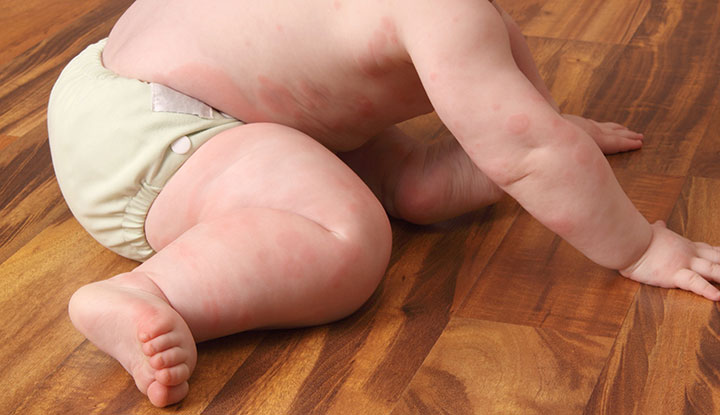
- Hives: Infant hives occur for the same reason they do in adults. A reaction happens when your baby eats or touches something they’re allergic to. Another name for hives is urticaria.
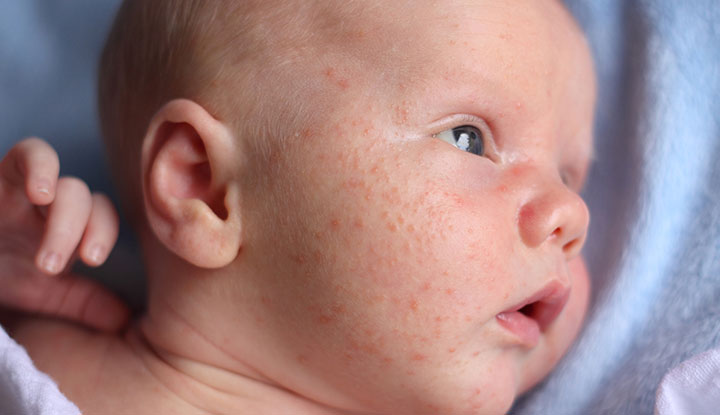
- Baby acne: Baby acne causes breakouts to occur on your newborn’s face and chest. It usually goes away on its own within your baby’s first three months of life.
link