


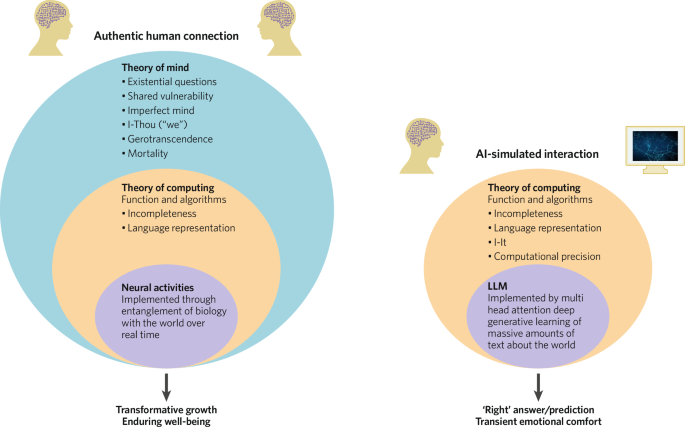
Hasan WU, Zaman KT, Wang X, Li J, Xie B, Tao C. Empowering Alzheimer’s caregivers with conversational AI: a novel approach for enhanced communication and personalized support. npj Biomed Innov. 2024;1:1–10.
Google Scholar
Reynolds CF, Weissman MM. Transdisciplinary science and research training in psychiatry: a robust approach to innovation. JAMA Psychiatry. 2022;79:839–40.
Google Scholar
Momota Y, Bun S, Hirano J, Kamiya K, Ueda R, Iwabuchi Y, et al. Amyloid-β prediction machine learning model using source-based morphometry across neurocognitive disorders. Sci Rep. 2024;14:7633.
Google Scholar
Shah S, Shah M. The effects of machine learning algorithms in magnetic resonance imaging (MRI), and biomarkers on early detection of Alzheimer’s disease. Adv Biomarker Sci Technol. 2024;6:191–208.
Sims JR, Zimmer JA, Evans CD, Lu M, Ardayfio P, Sparks J, et al. Donanemab in early symptomatic Alzheimer disease: the TRAILBLAZER-ALZ 2 randomized clinical trial. Jama. 2023;330:512–27.
Google Scholar
Van Dyck CH, Swanson CJ, Aisen P, Bateman RJ, Chen C, Gee M, et al. Lecanemab in early Alzheimer’s disease. N Engl J Med. 2023;388:9–21.
Google Scholar
Isaacson RS, Hristov H, Saif N, Hackett K, Hendrix S, Melendez J, et al. Individualized clinical management of patients at risk for Alzheimer’s dementia. Alzheimers Dement. 2019;15:1588–602.
Google Scholar
Reisberg B, Shao Y, Golomb J, Monteiro I, Torossian C, Boksay I, et al. Comprehensive, individualized, person-centered management of community-residing persons with moderate-to-severe Alzheimer disease: a randomized controlled trial. Dement Geriatr Cogn Disord. 2017;43:100–17.
Google Scholar
Premack D, Woodruff G. Does the chimpanzee have a theory of mind? Behav Brain Sci. 1978;1:515–26.
Google Scholar
Baron-Cohen S. Precursors to a theory of mind: understanding attention in others. In: Whiten A, editor Natural theories of mind: evolution, development and simulation of everyday mindreading. Oxford: Basil Blackwell, 1991:233–251.
Singer, T. & Tusche, A. In: Glimcher PW, Fehr E, editors. Neuroeconomics. Elsevier: 2014:513–32.
Happé F. Theory of mind and the self. Ann N Y Acad Sci. 2003;1001:134–44.
Google Scholar
Vogeley K, Bussfeld P, Newen A, Herrmann S, Happé F, Falkai P, et al. Mind reading: neural mechanisms of theory of mind and self-perspective. Neuroimage. 2001;14:170–81.
Google Scholar
Bering JM. The existential theory of mind. Rev Gen Psychol. 2002;6:3–24.
Google Scholar
Elyoseph Z, Hadar-Shoval D, Asraf K, Lvovsky M. ChatGPT outperforms humans in emotional awareness evaluations. Front Psychol. 2023;14:1199058.
Google Scholar
Yalom, I. D. Existential psychotherapy. New York: Basic Books; 2020.
Tornstam L. Gerotranscendence: the contemplative dimension of aging. J Aging Stud. 1997;11:143–54.
Google Scholar
Pressman, P. & van Denburg, E. American Psychiatric Association; 1990.
Buber, M. I and Thou (trans. Kaufmann W, Cullen, P). Scribner, New York; 1958.
Yalom ID, Houts PS, Zimerberg SM, Rand KH. Prediction of improvement in group therapy: an exploratory study. Arch Gen Psychiatry. 1967;17:159–68.
Google Scholar
Polster E, Polster M. Gestalt therapy integrated: contours of theory and practice. New York: Brunner/Mazel; 1973.
Horvath AO, Luborsky L. The role of the therapeutic alliance in psychotherapy. J Consulting Clin Psychol. 1993;61:561–73.
Google Scholar
Hopcroft JE, Motwani R, Ullman JD. Introduction to automata theory, languages, and computation. Acm Sigact N. 2001;32:60–65.
Google Scholar
Marks-Tarlow T, Shapiro Y, Wolf KP, Friedman HL. A fractal epistemology for a scientific psychology: bridging the personal with the transpersonal. Newcastle upon Tyne: Cambridge Scholars Publishing; 2020.
Pitt L. Introduction: Special issue on computational learning theory. Mach Learn. 1990;5:117–20. https://doi.org/10.1007/BF00116033.
Google Scholar
Ewald WB, Ewald W. From Kant to Hilbert volume 1: a source book in the foundations of mathematics. Vol. 1, OUP Oxford; 1996.
Gray R. Georg Cantor and transcendental numbers. Am Math Monthly. 1994;101:819–32.
Google Scholar
Gödel K. Über formal unentscheidbare Sätze der Principia Mathematica und verwandter Systeme I. Monatshefte für Mathematik Phys. 1931;38:173–98.
Google Scholar
Turing AM. On computable numbers, with an application to the Entscheidungsproblem. Proc Lond Math Soc. 1937;s2-42:230–65. https://doi.org/10.1112/plms/s2-42.1.230.
Google Scholar
Hofstadter DR. Gödel, Escher, Bach: an eternal golden braid. New York: Basic Books; 1999.
Turing AM. On computable numbers, with an application to the Entscheidungsproblem. A correction. Proc Lond Math Soc. 1938;2:544–6.
Google Scholar
DeSouza DD, Robin J, Gumus M, Yeung A. Natural language processing as an emerging tool to detect late-life depression. Front Psychiatry. 2021;12:719125.
Google Scholar
Hatton CM, Paton LW, McMillan D, Cussens J, Gilbody S, Tiffin PA. Predicting persistent depressive symptoms in older adults: a machine learning approach to personalised mental healthcare. J Affect Disord. 2019;246:857–60.
Google Scholar
Lin Y, Liyanage BN, Sun Y, Lu T, Zhu Z, Liao Y, et al. A deep learning-based model for detecting depression in senior population. Front Psychiatry. 2022;13:1016676.
Google Scholar
Sau A, Bhakta I. Predicting anxiety and depression in elderly patients using machine learning technology. Healthc Technol Lett. 2017;4:238–43.
Google Scholar
Song YLQ, Chen L, Liu H, Liu Y. Machine learning algorithms to predict depression in older adults in China: a cross-sectional study. Front Public Health. 2025;12:1462387.
Google Scholar
Abdollahi H. Artificial emotional intelligence in socially assistive robots, University of Denver. IEEE Trans Affect Comput. 2023;14:2020–32.
Google Scholar
Montemayor C, Halpern J, Fairweather A. In principle obstacles for empathic AI: why we can’t replace human empathy in healthcare. AI Soc. 2022;37:1353–9.
Google Scholar
Nejadshamsi S, Karami V, Ghourchian N, Armanfard N, Bergman H, Grad R, et al. Development and feasibility study of HOPE model for prediction of depression among older adults using Wi-Fi-based motion sensor data: machine learning study. JMIR Aging. 2025;8:e67715.
Google Scholar
Alberdi A, Weakley A, Schmitter-Edgecombe M, Cook DJ, Aztiria A, Basarab A, et al. Smart home-based prediction of multidomain symptoms related to Alzheimer’s disease. IEEE J Biomed Health Inform. 2018;22:1720–31.
Google Scholar
Cummins N, Matcham F, Klapper J, Schuller B. In Artificial Intelligence in Precision Health. San Diego, CA: Elsevier; 2020:231–55.
Low DM, Bentley KH, Ghosh SS. Automated assessment of psychiatric disorders using speech: a systematic review. Laryngoscope Investig Otolaryngol. 2020;5:96–116.
Google Scholar
Chou Y-H, Lin C, Lee S-H, Lee Y-F, Cheng L-C. User-friendly Chatbot to mitigate the psychological stress of older adults during the COVID-19 pandemic: development and usability study. JMIR Formative Res. 2024;8:e49462.
Google Scholar
Denecke K, Vaaheesan S, Arulnathan A. A mental health chatbot for regulating emotions (SERMO)-concept and usability test. IEEE Trans Emerg Top Comput. 2020;9:1170–82.
Google Scholar
Oh, K.-J., Lee, D., Ko, B. & Choi, H.-J. In 2017 18th IEEE international conference on mobile data management (MDM). IEEE: 2017:371–5.
Lee H, Chung MA, Kim H, Nam EW. The effect of cognitive function health care using artificial intelligence robots for older adults: systematic review and meta-analysis. JMIR Aging. 2022;5:e38896.
Google Scholar
Schuller D, Schuller BW. The age of artificial emotional intelligence. Computer. 2018;51:38–46.
Google Scholar
Fogelson DM, Rutledge C, Zimbro KS. The impact of robotic companion pets on depression and loneliness for older adults with dementia during the COVID-19 pandemic. J Holist Nurs. 2022;40:397–409.
Google Scholar
Kang HS, Makimoto K, Konno R, Koh IS. Review of outcome measures in PARO robot intervention studies for dementia care. Geriatr Nurs. 2020;41:207–14.
Google Scholar
De Carolis, B. et al. In Proceedings of the ACHI-the thirteenth international conference on advances in computer-human interactions. Nice, France: IARIA; 2020:452–7.
Tanioka T, Yokotani T, Tanioka R, Betriana F, Matsumoto K, Locsin R, et al. Development issues of healthcare robots: compassionate communication for older adults with dementia. Int J Environ Res Public health. 2021;18:4538.
Google Scholar
Roesler E, Manzey D, Onnasch L. A meta-analysis on the effectiveness of anthropomorphism in human-robot interaction. Sci Robot. 2021;6:eabj5425.
Google Scholar
Tanveer M, Richhariya B, Khan RU, Rashid AH, Khanna P, Prasad M, et al. Machine learning techniques for the diagnosis of Alzheimer’s disease: a review. ACM Trans Multimed Comput Commun Appl. 2020;16:Article 30–35. https://doi.org/10.1145/3344998.
Google Scholar
Lovejoy CA. Technology and mental health: the role of artificial intelligence. Eur Psychiatry. 2019;55:1–3.
Google Scholar
Alowais SA, Alghamdi SS, Alsuhebany N, Alqahtani T, Alshaya AI, Almohareb SN, et al. Revolutionizing healthcare: the role of artificial intelligence in clinical practice. BMC Med Educ. 2023;23:689.
Google Scholar
Gaonkar B, Cook K, Macyszyn L. Ethical issues arising due to bias in training AI algorithms in healthcare and data sharing as a potential solution. AI Ethics J. 2020;1. https://doi.org/10.47289/AIEJ20200916.
Graham S, Depp C, Lee EE, Nebeker C, Tu X, Kim HC, et al. Artificial intelligence for mental health and mental illnesses: an overview. Curr Psychiatry Rep. 2019;21:1–18.
Google Scholar
Khanna S, Srivastava S. Patient-centric ethical frameworks for privacy, transparency, and bias awareness in deep learning-based medical systems. Appl Res Artif Intell Cloud Comput. 2020;3:16–35.
Vayena E, Blasimme A, Cohen IG. Machine learning in medicine: addressing ethical challenges. PLoS Med. 2018;15:e1002689.
Google Scholar
Cartwright-Smith L, Gray E, Thorpe JH. Health information ownership: legal theories and policy implications. Vand J Ent Tech L. 2016;19:207–597.
Doraiswamy PM, Blease C, Bodner K. Artificial intelligence and the future of psychiatry: insights from a global physician survey. Artif Intell Med. 2020;102:101753.
Google Scholar
Safdar NM, Banja JD, Meltzer CC. Ethical considerations in artificial intelligence. Eur J Radiol. 2020;122:108768.
Google Scholar
Adamopoulou E, Moussiades L. In Artificial intelligence applications and innovations: 16th IFIP WG 12.5 International Conference, AIAI. Springer, Cham, 2020:373–83.
Koutsouleris N, Hauser TU, Skvortsova V, De Choudhury M. From promise to practice: towards the realisation of AI-informed mental health care. Lancet Digital Health. 2022;4:e829–e840.
Google Scholar
Hung L, Zhao Y, Alfares H, Shafiekhani P. Ethical considerations in the use of social robots for supporting mental health and wellbeing in older adults in long-term care. Front Robot AI. 2025;12:1560214.
Google Scholar
Alhuwaydi AM. Exploring the role of artificial intelligence in mental healthcare: current trends and future directions–a narrative review for a comprehensive insight. Risk Manag Healthc Policy. 2024;17:1339–48.
Google Scholar
Hall MA, Schulman KA. Ownership of medical information. JAMA. 2009;301:1282–4.
Google Scholar
Montgomery SA, Asberg M. A new depression scale designed to be sensitive to change. Br J Psychiatry. 1979;134:382–9. https://doi.org/10.1192/bjp.134.4.382.
Google Scholar
Singh V, Sarkar S, Gaur V, Grover S, Singh OP. Clinical practice guidelines on using artificial intelligence and gadgets for mental health and well-being. Indian J Psychiatry. 2024;66:S414–S419.
Google Scholar
Bell CC, Mehta H. The misdiagnosis of black patients with manic depressive illness. J Natl Med Assoc. 1980;72:141–5.
Google Scholar
Coleman D, Baker F. Misdiagnosis of schizophrenia in older, black veterans. J Nerv Ment Dis. 1994;182:527–8.
Google Scholar
DeSouza F, Parker CB, Spearman-McCarthy EV, Duncan GN, Black RMM. Coping with racism: a perspective of COVID-19 church closures on the mental health of African Americans. J Racial Ethn Health Disparities. 2021;8:7–11. https://doi.org/10.1007/s40615-020-00887-4.
Google Scholar
Hollar MC. The impact of racism on the delivery of health care and mental health services. Psychiatr Q. 2001;72:337–45.
Google Scholar
Jimenez DE, Park M, Rosen D, Joo JH, Garza DM, Weinstein ER, et al. Centering culture in mental health: differences in diagnosis, treatment, and access to care among older people of color. Am J Geriatr Psychiatry. 2022;30:1234–51. https://doi.org/10.1016/j.jagp.2022.07.001.
Google Scholar
Sashidharan SP, Francis E. Racism in psychiatry necessitates reappraisal of general procedures and Eurocentric theories. BMJ. 1999;319:254.
Google Scholar
Williams DR, Williams-Morris R. Racism and mental health: the African American experience. Ethn Health. 2000;5:243–68. https://doi.org/10.1080/713667453.
Google Scholar
Baclic O, Tunis M, Young K, Doan C, Swerdfeger H, Schonfeld J. Challenges and opportunities for public health made possible by advances in natural language processing. Can Commun Dis Rep. 2020;46:161–8. https://doi.org/10.14745/ccdr.v46i06a02.
Google Scholar
Grother P, Ngan M, Hanaoka K. Face Recognition Vendor Test (FRVT) Part 3: Demographic Effects. National Institute of Standards and Technology Interagency/Internal Report 8280, Gaithersburg, MD 2019.
Kim G, Aguado Loi CX, Chiriboga DA, Jang Y, Parmelee P, Allen RS. Limited English proficiency as a barrier to mental health service use: a study of Latino and Asian immigrants with psychiatric disorders. J Psychiatr Res. 2011;45:104–10. https://doi.org/10.1016/j.jpsychires.2010.04.031.
Google Scholar
Ayala FJ. Cloning humans? Biological, ethical, and social considerations. Proc Natl Acad Sci USA. 2015;112:8879–86. https://doi.org/10.1073/pnas.1501798112.
Google Scholar
Kass LR. The wisdom of repugnance: why we should ban the cloning of humans. N Repub. 1997;216:17–26.
Spurgeon B. France bans reproductive and therapeutic cloning. BMJ. 2004;329:130 https://doi.org/10.1136/bmj.329.7458.130-d.
Google Scholar
Bukowski M, Farkas R, Beyan O, Moll L, Hahn H, Kiessling F, et al. Implementation of eHealth and AI integrated diagnostics with multidisciplinary digitized data: are we ready from an international perspective? Eur Radio. 2020;30:5510–24. https://doi.org/10.1007/s00330-020-06874-x.
Google Scholar
Floridi L, Luetge C, Pagallo U, Schafer B, Valcke P, Vayena E, et al. Key ethical challenges in the European medical information framework. Minds Mach. 2019;29:355–71. https://doi.org/10.1007/s11023-018-9467-4.
Google Scholar
Reddy S, Allan S, Coghlan S, Cooper P. A governance model for the application of AI in health care. J Am Med Inf Assoc. 2020;27:491–7. https://doi.org/10.1093/jamia/ocz192.
Google Scholar
Fanni R, Steinkogler VE, Zampedri G, Pierson J. Enhancing human agency through redress in Artificial Intelligence Systems. AI Soc. 2023;38:537–47. https://doi.org/10.1007/s00146-022-01454-7.
Google Scholar
Love CS. Just the facts Ma’am”: moral and ethical considerations for artificial intelligence in medicine and its potential to impact patient autonomy and hope. Linacre Q. 2023;90:375–94. https://doi.org/10.1177/00243639231162431.
Google Scholar
Saeidnia HR, Hashemi Fotami SG, Lund B, Ghiasi N. Ethical considerations in artificial intelligence interventions for mental health and well-being: ensuring responsible implementation and impact. Soc Sci. 2024;13:381.
Google Scholar
Thakkar A, Gupta A, De Sousa A. Artificial intelligence in positive mental health: a narrative review. Front Digit Health. 2024;6:1280235. https://doi.org/10.3389/fdgth.2024.1280235.
Google Scholar
Tiribelli S. The AI ethics principle of autonomy in health recommender systems. Argumenta. 2023;16:1–18.
Matheny ME, Whicher D, Israni ST. Artificial intelligence in health care: a report from the National Academy of Medicine. Jama. 2020;323:509–10.
Google Scholar
Tavory T. Regulating AI in mental health: ethics of care perspective. JMIR Ment Health. 2024;11:e58493.
Google Scholar
link